

Table of Contents
- What Custom Womenswear Brands Offer
- Made-to-Order Clothing Brands and the Custom Design Process
- Sustainable Custom Fashion: Zero-Waste Production and Artisanal Craftsmanship
- Bespoke Womenswear Services: Personalized Fit and Measurements
- Custom vs. Mass-Produced: Cost, Quality, and Environmental Impact
- How to Choose the Right Custom Womenswear Brand for Your Style
- Caring for Custom-Made Textiles
- Frequently Asked Questions
Last Updated: September 25, 2026
What Custom Womenswear Brands Offer
Custom womenswear brands offer personalized, one-of-a-kind pieces tailored to your exact measurements, aesthetic preferences, and values. At AlterNits Atelier, we create handcrafted garments from upcycled luxury menswear, combining sustainability with artisanal craftsmanship in ways mass production cannot.
Custom womenswear brands offer fit that works for your body, not a standardized template. Some provide design-your-own experiences; others present curated collections reimagined into new silhouettes. All share a commitment to personalization and quality that retail chains abandon at scale.
Made-to-Order Clothing Brands and the Custom Design Process
Made-to-order brands produce pieces only after a customer orders them, eliminating overstock and waste. The custom design process begins with either a blank canvas or curated pre-designed pieces that the brand reimagines for you.
At AlterNits Atelier, our process starts with luxury menswear overruns that would otherwise become waste. Artisans deconstruct and reconstruct these pieces by hand, creating custom-sized garments with silhouettes designed for women's bodies. Each piece is one-of-a-kind.
Taking Accurate Measurements: The Foundation of Fit
Accurate measurements are non-negotiable, they determine whether your final piece fits beautifully or requires costly alterations. Here's how to capture your true dimensions:
Essential measurements for womenswear:
-
Bust: Measure around the fullest part of your chest while wearing an unpadded bra. Keep the tape parallel to the ground and snug but not tight.
-
Waist: Measure at your natural waist (the narrowest point) without pulling the tape tight. This is typically where your body bends when you lean to one side.
-
Hip: Measure around the fullest part of your hips and seat, keeping the tape level. Stand with feet hip-width apart.
-
Shoulder width: Measure from the outer edge of one shoulder bone to the outer edge of the other. This determines sleeve placement and overall silhouette balance.
-
Sleeve length: Measure from the center back neck, across the shoulder, down the arm to your wrist bone with your arm slightly bent. This ensures sleeves hit at the correct length.
-
Torso length: Measure from the base of your neck down the center front to your waist. This determines bodice proportions and where seams should sit.
-
Inseam or dress length: Measure from your waist down to where you want the hem to fall (ankle, knee, midi, etc.).
Pro tips for accuracy:
- Wear the undergarments you'll wear with the finished piece. A bra with different support changes your bust measurement.
- Have someone else take measurements if possible. Self-measurement often introduces errors, especially for shoulder width and back length.
- Use a soft measuring tape, not a rigid ruler. Fabric tape conforms to your body's curves.
- Measure twice and record both numbers. If they differ by more than a quarter-inch, measure a third time.
- Take photos of your measurements written down. You'll need them during the ordering process.
Most brands provide detailed measurement guides or virtual consultations. If you're uncertain about any measurement, contact the brand before ordering, custom makers prefer to clarify now rather than remake a piece later.
| Step | What Happens | Timeline |
|---|---|---|
| Order placement | You select design, fabric, measurements | Immediate |
| Production | Garment is handcrafted to spec | 2-8 weeks (varies by brand) |
| Quality check | Artisans inspect finished piece | 1-2 weeks |
| Shipping | Item ships to your address | 1-2 weeks |
Sustainable Custom Fashion: Zero-Waste Production and Artisanal Craftsmanship
Sustainable custom fashion addresses waste from conventional manufacturing: scraps, overstock, and unsold inventory in landfills. Zero-waste production eliminates these inefficiencies by producing only what's ordered and using every scrap.
Handcrafted garments have intentional seams where every detail serves a purpose. At AlterNits Atelier, we practice zero-waste philosophy by reimagining luxury menswear overruns into new womenswear pieces, reducing waste while delivering high-quality design.
The sustainability argument extends beyond environmental impact. Slow fashion, the deliberate opposite of fast fashion's speed, encourages you to invest in fewer, better pieces. You're not buying impulsively; you're commissioning garments you'll actually wear for years. This mindset shift reduces overall consumption, which is where real environmental benefit lives.
Bespoke Womenswear Services: Personalized Fit and Measurements
Bespoke womenswear represents the highest level of customization: the entire garment, silhouette, proportions, and details are designed around your body and preferences. Personalized fit is the core promise.
Precise measurements are the foundation of bespoke success. Most services provide detailed instructions or virtual consultations. Key measurements include bust, waist, hip, shoulder width, sleeve length, and torso length.
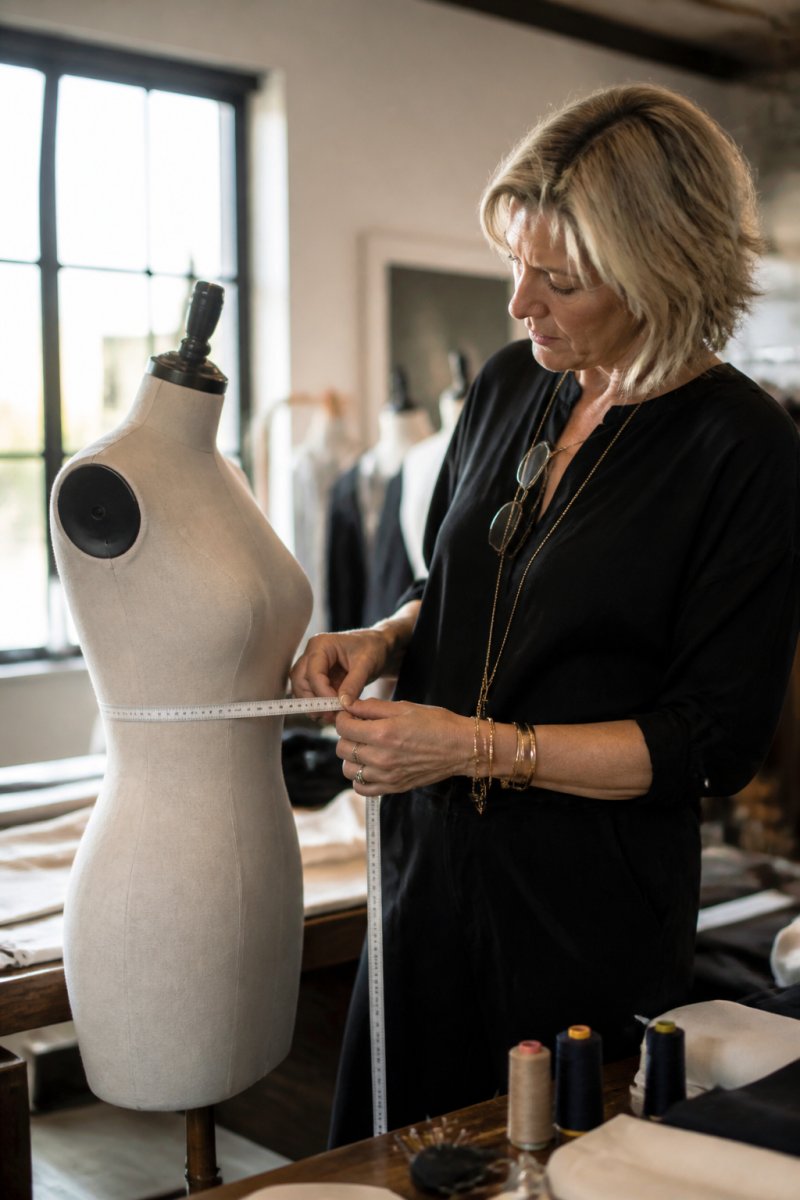
Bespoke work is collaborative: you consult with someone who understands proportion, fabric behavior, and how garments move on bodies. A bespoke maker recommends flattering silhouettes, suggests appropriate fabrics, and adjusts details based on how you move.
Custom vs. Mass-Produced: Cost, Quality, and Environmental Impact
Custom womenswear costs more than mass-produced apparel, reflecting differences in production methods, material quality, and labor. But the financial story changes when you measure value over time.
The Long-Term Cost-Per-Wear Analysis
Cost per wear is the metric that reveals why custom pieces often deliver better financial value than cheaper mass-produced alternatives. Here's how the math works:
Mass-produced dress: $85 purchase, 40-60 wears, $1.42-$2.13 per wear.
Custom womenswear: $250 purchase, 200-300 wears, $0.83-$1.25 per wear.
Quality Divergence: Where the Difference Lives
Custom pieces offer precision fit, superior materials, and ethical production. Mass production achieves low prices through volume and standardization; custom production achieves quality through attention to detail and skilled labor.
Environmental Impact: Production Waste vs. Longevity
The environmental impact tells a parallel story to the financial one. Mass production generates massive waste: excess inventory, unsold stock, and the carbon footprint of shipping items globally that may never sell.
- Carbon footprint per wear: A mass-produced dress worn 50 times generates roughly 2 kg of CO₂ per wear (accounting for production, shipping, and eventual disposal). A custom dress worn 250 times generates approximately 0.4 kg of CO₂ per wear.
- Water consumption:
- Landfill impact: A mass-produced garment worn briefly and discarded contributes to landfill burden. A custom piece worn for years reduces the total number of garments entering waste streams.
How to Choose the Right Custom Womenswear Brand for Your Style
Choosing among custom womenswear brands requires clarity about what matters most to you: sustainability, design aesthetic, price point, lead time, or a combination of factors. Start by identifying your non-negotiables. Are you committed to zero-waste production? Do you need a specific silhouette or fabric type? What's your budget?
Caring for Custom-Made Textiles
Custom-made garments deserve care that matches their quality and cost. Most handcrafted pieces use natural fibers, cashmere, merino wool, Pima cotton, that require specific handling to maintain their integrity over time.
| Fiber Type | Washing | Drying | Storage |
|---|---|---|---|
| Cashmere | Hand wash cool water | Lay flat | Cedar blocks, fold |
| Merino wool | Hand wash or dry clean | Lay flat | Cool, dry place |
| Pima cotton | Hand wash cool | Lay flat or gentle hang | Standard closet |
| Blends | Follow most delicate fiber | Lay flat | Match most delicate fiber |
Frequently Asked Questions
What is the difference between custom womenswear brands and mass-produced clothing?
Custom womenswear brands create garments tailored to individual specifications, offering personalized fit, unique design choices, and made-to-order production. Mass-produced clothing follows standardized sizing and designs manufactured in bulk. Custom brands typically emphasize artisanal craftsmanship, higher-quality materials, and sustainable production methods, while mass production prioritizes volume and lower costs. The result is clothing that fits your body precisely rather than forcing your body to fit standard sizes.
How does the made-to-order process work for custom womenswear brands?
Made-to-order clothing begins with your design selections and measurements. You choose fabrics, silhouettes, and details, then provide accurate body measurements or attend a fitting. The brand's artisans deconstruct quality source materials and handcraft your garment from scratch. Lead times vary but typically range from weeks to months, depending on complexity. Each piece is individually produced, ensuring no two garments are identical. This on-demand production eliminates excess inventory and reduces waste compared to mass manufacturing.
Are custom womenswear brands sustainable?
Many custom womenswear brands prioritize sustainability through zero-waste production, upcycled materials, and ethical manufacturing. Brands that reimagine luxury overruns into new garments eliminate textile waste while delivering high-quality pieces. Made-to-order production prevents unsold inventory from ending up in landfills. Handcrafted, artisanal construction often uses premium natural fibers and supports local manufacturing. However, sustainability varies by brand, look for transparency about material sourcing, labor practices, and production methods when evaluating custom womenswear options.
How do custom womenswear brands ensure a perfect fit without in-person fittings?
Custom brands use detailed measurement guides and often offer virtual consultations to capture your proportions accurately. You provide specific body measurements following their instructions, and experienced artisans use this data to construct garments with personalized fit. Many brands also offer adjustments or alterations if needed after delivery. Some maintain detailed client profiles for repeat orders, refining fit based on previous pieces. This approach works well for customers who understand their measurements and communicate fit preferences clearly.
What should I look for when selecting a custom womenswear brand?
Evaluate brands based on material quality, craftsmanship transparency, sustainability practices, pricing structure, lead times, and return policies. Review their production process, do they source ethically? Are pieces handcrafted or machine-made? Check customer reviews for fit accuracy and durability. Compare fabric options and design flexibility against your budget. Look for brands that clearly document their methods, such as upcycling practices or zero-waste production. Consider whether they offer adjustments or support if a piece doesn't fit as expected, and assess their communication responsiveness throughout the ordering process.
0 comments