

Table of Contents
- Start With a Definition: What Sustainable Luxury Womenswear Actually Means
- The Sustainable Fabrics Guide: Natural Fibers vs. Synthetic Alternatives
- How to Verify Sustainable Fashion Claims Before You Buy
- Reading Supply Chain Transparency and Labor Conditions
- Investment Piece Evaluation: Cost-Per-Wear and Quality Craftsmanship
- Building a Capsule Wardrobe of Sustainable Luxury Womenswear
- Common Mistakes That Lead to Greenwashing Purchases
- Frequently Asked Questions
Last Updated: September 23, 2026
Start With a Definition: What Sustainable Luxury Womenswear Actually Means
Sustainable luxury womenswear is clothing made from responsibly sourced or repurposed materials, produced under fair labor conditions, and designed to last for years rather than a single season. It sits where high-end craftsmanship meets low environmental impact, and it is the opposite of fast fashion's disposable model.
The Sustainable Fabrics Guide: Natural Fibers vs. Synthetic Alternatives
Natural fibers like cashmere, merino wool, alpaca, linen, and organic cotton generally biodegrade, breathe well, and age gracefully. Synthetic alternatives such as polyester and nylon are durable and cheap, but they are petroleum-based, shed microplastics in the wash, and rarely break down.
Material Performance Metrics: Going Beyond "Organic"
Most sustainable fashion guides stop at the fiber name. For luxury buyers, the more useful question is how a specific textile performs, how it wears, how it ages, and what its production actually costs the planet. A few luxury-relevant comparisons are worth knowing:
- Regenerative wool vs. conventional wool. Regenerative grazing practices are associated with soil carbon sequestration and improved biodiversity on pastureland, whereas conventional wool production often relies on synthetic fertilizers and can contribute to soil degradation. The fiber is the same; the land management behind it is not.
- Peace silk vs. conventional silk. Conventional silk production typically involves boiling cocoons with the silkworm inside. Peace silk (also called ahimsa silk) allows the moth to emerge before the cocoon is processed, which changes both the labor process and the yield, and usually the price.
- Alpaca vs. cashmere. Alpaca is generally warmer by weight, has a smoother scale structure that resists pilling, and is often produced by smallholder herds in high-altitude regions. Cashmere is softer against skin but shorter-staple and more prone to pilling over time. For a piece you intend to wear for a decade, that durability difference matters.
- Linen vs. organic cotton. Linen from flax typically requires less irrigation than cotton and improves with washing, but it wrinkles. Organic cotton uses no synthetic pesticides but still needs significant water. Neither is universally "better", it depends on the garment's intended use.
Why Deadstock and Upcycled Materials Outperform Virgin Synthetic Blends
Deadstock and upcycled materials skip the most resource-intensive part of fashion: making new fabric from scratch. When a garment is rebuilt from existing premium textiles, no new fiber is grown, spun, or dyed, which cuts water use, chemical load, and textile waste in one move. The carbon footprint of a garment is dominated by fiber production and dyeing, so reusing finished fabric avoids the largest emissions slice entirely.
How to Verify Sustainable Fashion Claims Before You Buy
Verification comes down to evidence, not adjectives. A credible brand can show you certifications, name its suppliers, and explain where its materials came from. A vague brand uses words like "eco-friendly" and "green" with nothing behind them.
- Is there a named third-party certification on the product page?
- Does the brand disclose fiber content by percentage?
- Can you find the factory or workshop location?
- Does the brand explain what happens to production waste?
- Are sustainability claims specific, or just mood words?
The Certifications That Actually Mean Something
Third-party certifications carry weight because an outside body audits the claims. Look for recognized programs covering organic fiber, fair labor, and responsible textile production. The Federal Trade Commission's Green Guides set the baseline for how environmental marketing claims must be substantiated in the United States, which is why vague "green" language without proof can cross into misleading advertising.
Reading Supply Chain Transparency and Labor Conditions
Supply chain transparency means a brand can trace and disclose where its materials come from and who makes the final garment. Labor conditions are the human side of that chain: fair wages, safe workshops, and no forced or child labor.
Investment Piece Evaluation: Cost-Per-Wear and Quality Craftsmanship
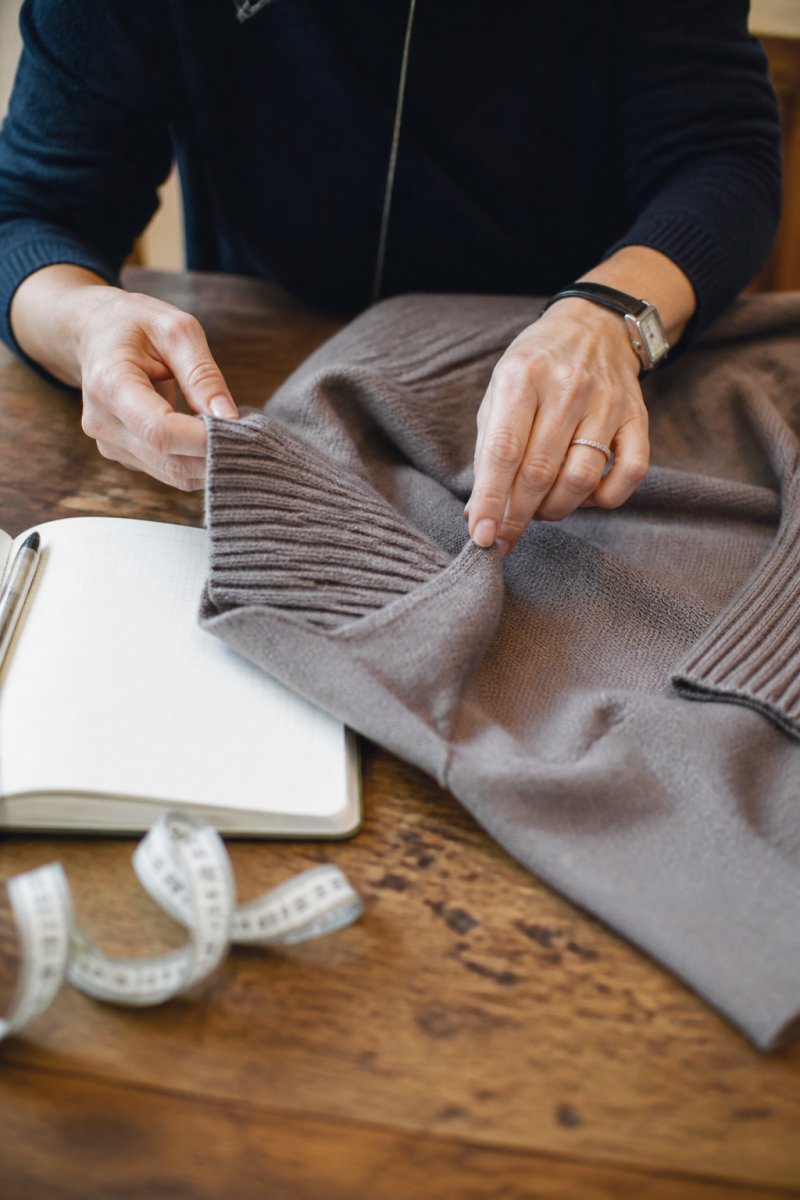
Cost-per-wear is the purchase price divided by the number of times you actually wear the item. A $300 dress worn 100 times costs $3 per wear; a $40 fast-fashion dress worn three times costs more than $13 per wear. Longevity, not the sticker price, decides the real value.
A Luxury-Specific Evaluation Framework
Most cost-per-wear advice was written for mid-market clothing. Luxury pieces need a wider lens because the resale market, the material's aging behavior, and the construction method all change the math. A practical framework has five inputs:
- Acquisition cost. The price you pay, including any alterations or import duties.
- Projected wear count. Be honest. A structured wool coat in a neutral color will likely be worn far more often than a statement piece in a trend color.
- Resale or residual value. Luxury pieces from recognized ateliers often retain a meaningful share of their original value on the secondary market, especially for classic silhouettes in natural fibers. That residual value effectively lowers your true cost. Fast-fashion pieces typically have near-zero resale value.
- Maintenance cost. Dry cleaning, repairs, and moth protection add up. A cashmere piece that needs specialty cleaning twice a season carries a different total cost than a machine-washable cotton blend.
- Replacement frequency. A well-made natural-fiber garment may last a decade or more with care; a synthetic blend may pill or lose shape within a few seasons.
Authentication and Resale: The Luxury Buyer's Advantage
One of the most under-covered angles in sustainable luxury is the secondary market. Buying pre-owned luxury womenswear is one of the most direct ways to reduce a garment's environmental impact, because the piece already exists, no new fiber, no new dye, no new manufacturing. But the secondary market introduces a risk that new retail does not: authentication.
A few practical verification steps:
- Check the label and interior tags. Authentic luxury pieces typically have consistent font, stitching, and placement across the brand's production. Inconsistent labels are a red flag.
- Examine hardware and zippers. Luxury ateliers often use branded zippers and hardware with specific finishes. Generic or mismatched hardware is a warning sign.
- Look at the stitching density. High-end construction usually has tighter, more even stitching than counterfeits.
- Request provenance. Original receipts, dust bags, and boxes are not proof on their own, but their absence combined with other red flags is meaningful.
- Use a paid authentication service for high-value pieces. For anything above a few hundred dollars, a third-party authenticator is cheap insurance.
The Craftsmanship Signals That Hold Their Value
| Evaluation Factor | What to Look For | Why It Matters |
|---|---|---|
| Cost-per-wear | Price divided by wears | Reveals true value |
| Stitching | Even, tight, finished seams | Signals durability |
| Fabric weight | Substantial, dense natural fiber | Holds shape longer |
| Construction | Pattern-matched, hand-finished | Indicates real craftsmanship |
| Versatility | Works across multiple outfits | Raises wear count |
| Resale potential | Classic silhouette, natural fiber, recognized maker | Lowers true cost |
| Documentation | Provenance, fabric origin, construction notes | Enables authentication |
Our The Baby Alpaca Two Piece Dress is built for exactly this math: extra-fine merino wool and Pima cotton, cut to move from day to evening, so the wear count climbs fast, and the natural-fiber construction holds its shape across years of wear.

Building a Capsule Wardrobe of Sustainable Luxury Womenswear
A capsule wardrobe is a small set of versatile pieces that mix and match across most of your life. Built well, it lowers your total spend, raises your cost-per-wear, and cuts the number of garments you buy and discard.
- One structured dress for work and evening
- One versatile two-piece set you can split
- One layering knit in a neutral tone
- One statement piece with real texture or pattern
- One pair of boots that works with everything
Common Mistakes That Lead to Greenwashing Purchases
Greenwashing is when a brand markets itself as sustainable without the substance to back it up. The most common trap is buying on the word "sustainable" alone instead of checking the fiber, the certification, and the supply chain.
A few mistakes I see constantly:
- Trusting a single buzzword over documented evidence
- Assuming higher price automatically means ethical production
- Ignoring synthetic content in a "natural" blend
- Buying a "sustainable" piece you will only wear twice
- Skipping the return policy on custom or one-of-a-kind items
Frequently Asked Questions
What defines sustainable luxury in womenswear?
Sustainable luxury womenswear combines premium materials, ethical labor, and low environmental impact. Look for natural fibers, traceable supply chains, and timeless design that resists fast-fashion turnover. A $300 cashmere dress made from upcycled sweaters, for example, uses existing materials and skilled handcraft, reducing textile waste while delivering the quality and fit you expect from luxury.
How can I verify if a luxury brand is truly sustainable?
Start by checking for third-party certifications. Then review the brand's supply chain transparency: does it name its factories? Does it publish environmental impact data? For recycled clothing brands, ask for proof of material sourcing. If a brand cannot answer basic questions about where its fabrics come from, treat its sustainability claims with skepticism.
What should I look for in sustainable textile certifications?
Focus on certifications that verify specific claims. For upcycled garments, look for transparency about the original materials. A brand that reworks luxury menswear into womenswear should be able to tell you the fiber content and origin of each piece.
Why is artisanal craftsmanship important in sustainable fashion?
Artisanal craftsmanship extends garment longevity. Hand-finished seams, custom sizing, and quality construction mean the piece lasts years, not months. This directly reduces textile waste and supports the circular economy. When you invest in a handcrafted, one-of-a-kind piece, you are paying for durability and fit that mass-produced garments rarely match, which lowers your cost-per-wear over time.
0 comments